
1. Creative drives ROI when it captures attention, sparks emotion, and is clearly linked to the brand.
2. TRA’s Creative Edge Framework measures these three pillars: Remarkable, Rewarding, and Remembered.
3. The framework is backed by global evidence and New Zealand and Australia norms.
4. It helps marketers understand which creative will deliver the strongest commercial impact.
1. Creative drives ROI when it captures attention, sparks emotion, and is clearly linked to the brand.
2. TRA’s Creative Edge Framework measures these three pillars: Remarkable, Rewarding, and Remembered.
3. The framework is backed by global evidence and New Zealand and Australia norms.
4. It helps marketers understand which creative will deliver the strongest commercial impact.

Strong creative can have a huge impact on the return on investment of advertising. Creative is the second-biggest driver of advertising profitability – behind only brand size1. The strongest creative can deliver up to 12x higher ROI, making it one of the most powerful levers marketers can pull. TRA’s Creative Edge Framework measures creative quality across three pillars: Remarkable, Rewarding, and Remembered. Each ad receives a score on all three, creating a single Creative Edge score benchmarked against category and TRA norms.
‘Norms’ show how a piece of creative performs against typical results for the category and against TRA’s benchmarks. They give marketers a sense of what “good” looks like in context.
The framework is based on global best practice coming out of the likes of WARC, Cannes Lions, and thought leaders such as Peter Field, Les Binet, Karen Nelson-Field, and James Hurman.
Creative Edge is about ensuring any creative work has the potential to move beyond an influential idea to an enduring icon, where the greatest return on investment is realised2.
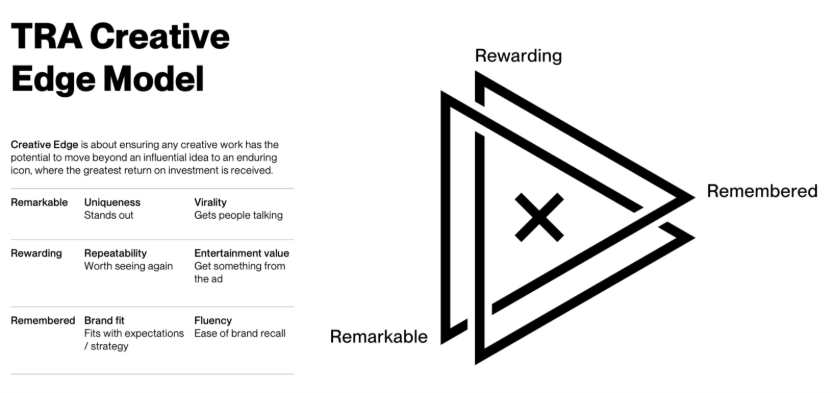
In no particular order, the first pillar of Creative Edge is Remarkable, which focuses on assessing whether a piece of creative stands out and generates buzz.
Buying media is expensive, so it is important that creative is developed in a way that maximises its chances of getting attention. Research by Karen Nelson-Field has shown us the critical importance of attention in building and embedding memory structures. Advertising that generates more attention is more likely to strengthen brand associations than advertising that generates less attention.
Humans are innately wired to pay attention to things that are unique, novel, or that surprise them. Think about the surprise you get when your doorbell rings despite not expecting any visitors, or when you see someone walking down the street in fancy dress. It captures your attention. Advertising is no different. Unique and novel campaigns, especially those that surprise, are more likely to capture attention and get people talking.
Binet and Field’s analysis of the IPA effectiveness awards revealed that campaigns that create buzz and talkability were strongly linked to positive outcomes across both brand and business metrics3. The ability to generate social buzz and word-of-mouth is therefore another strong indicator of a Remarkable creative.
What are some examples of Remarkable campaigns?
Allianz – Care you can count on (48 vs 39 TRA Norms)
In TRA’s Favourite Ad Study in 2025, Allianz topped the list when people were asked to spontaneously name their favourite ad across any category. A core reason it stood out is its Remarkability.
While a lot of insurance advertising typically involves an accident and an insurer resolving that issue, Allianz’s ‘Care you can count on’ advert stood out from other insurers by telling a story with humour through a bird metaphor where an eagle saves the day for a finch during a storm. The uniqueness of a finch and eagle was a clear differentiator for the ad, with 64% of Australians stating there are ‘not many ads like it’, well above the TRA norms of 43%.
Turners – ‘Tina’s Road Trip’ (53 vs 39 TRA Norms)
‘Tina’s Road Trip’ was crowned New Zealand’s favourite ad in the 2025 TRA study. Backing up the award-winning first iteration of Tina from Turners was no easy feat, but Turners were able to do this while still standing out as fresh and novel, as indicated by the strong Remarkable score. The Road Trip execution showcased that brands can consistently reinforce a brand idea but create enough novelty to grab attention, with 74% claiming there are not many ads like this vs 43% TRA Norms. The ad strikes a powerful balance between consistency and delivering something new. Leveraging Tina’s well-liked personality and a catchy song, this ad dials up its distinctive New Zealand humour, allowing it to stand out from the rest and generate buzz. Over half of viewers (58%) stated they would take some action as a result of seeing it such as sharing it, liking it online, or talking to others about it, well above TRA Norms at 46%.
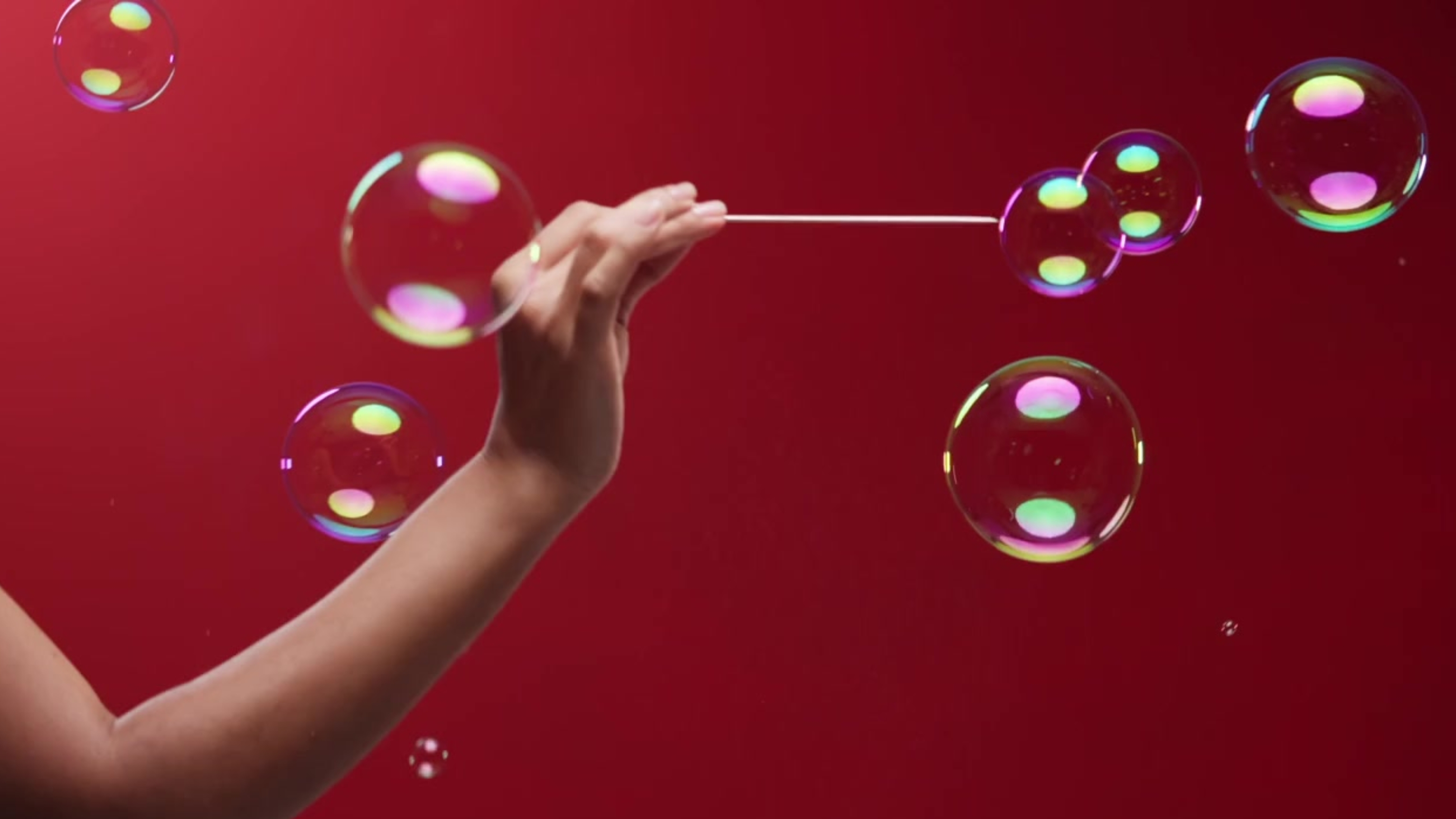
The Rewarding pillar is all about adding something to the life of the viewer. Ads that connect on an emotional level and deliver entertainment value through emotive storytelling hold attention and spark desire for repeat viewing.
Research by Binet and Field in ‘The Long and the Short of It’ determined that emotionally engaging creative performs far better than rational messaging at driving brand outcomes and long-term commercial outcomes3. Strong and salient emotional campaigns were also found to amplify the impact of short-term rational campaigns.
Strong emotive campaigns come in many different shapes and sizes. Some use humour, while others tell a more heartwarming story. However, the core premise remains – strong emotive campaigns add something to the life of the viewer. The Rewarding pillar acknowledges this by capturing a variety of outcomes, such as: Did the ad deliver entertainment value? Was it funny? Was there a great story? Was it heartwarming? Did it have a great soundtrack? All these outcomes are elements of a strong Rewarding campaign for the viewer. A campaign doesn’t need to nail all outcomes, but nailing some of them will help ensure a campaign connects and gets people wanting to see it again.
What are some examples of Rewarding campaigns?
RACQ – You with RACQ? (46 vs 37 TRA Norms)
The ‘You with RACQ?’ advert delivers a Rewarding viewing experience to its audience while landing the key message that RACQ covers people for both flood and storm damage. The talking water dragons and witty and easy-going humour ensure the ad is delivering entertainment value (55% vs 32% TRA Norms) to the viewer, and scoring highly on funny (49% vs 18%). With the ad delivering emotionally, people also want to see the advert again (72% vs 55% TRA Norms).
TUX NZ – Feeding the Kiwi in all our dogs for 70 years! (55 vs 37 TRA Norm)
At the core of TUX’s ad is great emotional storytelling. It tells the story of a city dog, Bjorn, who takes a trip to the country and gets stuck right in alongside the farm dogs, earning their respect and joining them for a well-deserved meal of TUX. New Zealanders agreed it was a great story (45% vs 18% TRA Norms), that was funny (55% vs 18%) TRA Norms and delivered entertainment value (59% vs 32%). Dogs have a way of tugging people's heartstrings, and the TUX ad did just that with 51% agreeing it was heartwarming, compared to 14% TRA Norms. Not only did the ad deliver strong emotional storytelling, the nostalgic soundtrack from the TUX adverts of old was also a winner (35% great soundtrack vs 15% TRA Norms).
The Remembered pillar measures whether people can link the creative back to the brand. This is often the pillar where many brands falter. Even the most Remarkable and Rewarding creative can lose its impact if it’s not clearly linked back to the brand. Ultimately, poorly branded creative results in wasted media spend.
A Remembered campaign requires frequent use of brand codes, also known as distinctive brand assets, throughout an ad. Ensuring your brand codes, such as your logo, slogan, colour and sounds overtly show up is crucial to ensuring people know what brand the creative is for. You can’t just rely on a logo at the end for effective brand attribution. Recent research by Mark Ritson and System 1 highlighted that the number of times your brand codes show up will impact your brand attribution – with 7 times the magic number.
Well-branded creative also gets more attention. Research by Dr Karen Nelson-Field highlights that well-branded creative gets more seconds of active attention, can reduce the time of attention needed to build memory structures, and can act as an attention multiplier with well branded seconds of attention found to generate 2.5x better ROI than poorly branded seconds of attention4.
Alongside strong use of brand codes, remaining consistent in how the brand shows up helps to ensure a creative is Remembered. Brands that have long-enduring campaign platforms that evolve over time, rather than reinventing the look and feel make it easier for the viewer to attribute it to the brand. Therefore, to be Remembered, creative needs to have consistency with what the viewer has seen and come to know about the brand.
What are some examples of Remembered campaigns?
ALDI – Everyday low prices (79 vs 58 TRA Norms)
The ALDI ad makes it exceptionally easy for the brand to be Remembered amongst viewers. The ad takes place at the highly recognisable ALDI aisle experience and has ALDI’s distinctive assets scattered throughout, making it easy for over two-thirds of people to recall this ad was from ALDI (69% vs 47% TRA Norms). The combination of the distinctive tone and humour of the ad and consistency with ALDI’s core value proposition around value also makes it feel like an ALDI ad – 55% saying it was really good at making it feel like it was an ad from ALDI (vs. 29% TRA Norms). By combining strong use of distinctive brand assets and ensuring consistency over time in how ALDI shows up with its humour and brand positioning ensures this advert is easily remembered.
Pak’nSave – Our Policy: New Zealand’s lowest food prices (85 vs 58 TRA Norms)
It is no surprise that Pak’nSave leads all New Zealand ads on the Remembered pillar. Pak’nSave won the Excellence in Long-Term Marketing Strategy at the NZ Marketing Awards 2025 as it has stuck to a consistent strategy for 18 years. At the heart of the ad is Pak’nSave’s core positioning of delivering low prices. As has been the case for the last 18 years, this is delivered with clear and consistent distinctive brand assets that include stickman, the colour yellow, and Paul Ego’s distinctive Pakn’Save voice. Sticking to these core assets and consistent positioning means viewers are met with what they expect from Pak’nSave (66% saying it was really good at making it feel like it was from Pak’nSave, compared to 29% TRA Norms), making it easy for people to recall the ad is for Pak’nSave (78% vs 47% TRA Norms).
Creative Edge makes it clear what strong creative looks like – work that captures attention, builds emotion, and is unmistakably linked to the brand. When those elements align, creative delivers the commercial impact marketers need.
Norms are for Australasia (Australia and New Zealand).
References:

.png)






.jpg)


_11zon.jpg)

%20(1)_11zon.jpg)


.jpg)

.jpg)
edited.jpeg)