
1. Loyalty is habit, not emotion. People stick with what’s easy and familiar.
2. Consistency builds loyalty by turning decisions into automatic behaviour.
3. Friction breaks loyalty. The moment customers have to think or re-learn, they start to drift.
1. Loyalty is habit, not emotion. People stick with what’s easy and familiar.
2. Consistency builds loyalty by turning decisions into automatic behaviour.
3. Friction breaks loyalty. The moment customers have to think or re-learn, they start to drift.
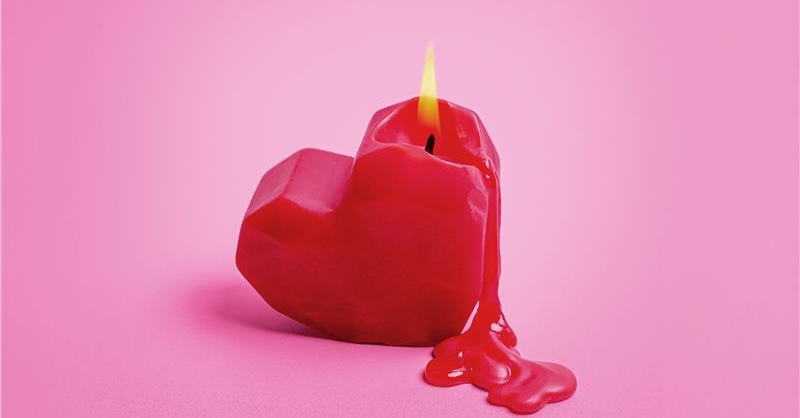
Customer loyalty is the tendency for customers to repeatedly choose a brand over time, driven by a combination of habit, ease, trust, and perceived value.
Most organisations treat loyalty as something customers consciously grant. They assume it is earned through emotional connection, reward schemes, brand storytelling, or moments of delight.
While these things are important, in many cases, real-world loyalty is far less romantic. Customers rarely wake up and decide to be loyal – they drift into it. Customers do not consciously choose loyalty; they stay because the experience works and it’s familiar – and because leaving would mean effort and friction.
When the experience is so easy, predictable, and familiar enough that leaving feels harder than staying, when effort, cognitive load, and risk is low. It’s habitual and behavioural. It’s passive and effort–driven.
If you want to build brand loyalty, it’s just as much about behavioural as emotional connection. Tapping into the underlying habits and subconscious behaviours of customers is important for loyalty.
The human brain is wired for efficiency, and it’ll automate where it can. That’s why you can often drive home and barely remember the journey or tie your shoes without a conscious thought. Every decision carries cognitive cost, the more effort something demands, the more likely we are to hesitate, reconsider, or defer.
Customer behaviour works in much the same way.
At first, interactions with a brand require active evaluation. Customers compare options, consider price, assess risk, and decide deliberately. This is why in the early stages of engaging with a new brand, ensuring the experience is seamless is important. Extrinsic motivations such as discounts also help.
When an experience consistently delivers the same outcome with minimal effort, the brain begins to compress that decision into habit.
Habits are reinforced by cues. Time of day, notifications, and other triggers all prompt behaviour. The morning coffee run, that Wednesday night trip to the pub, or the daily commute to work. These cues signal the brain that it can follow the same routine again without reconsidering the decision.
Over time, these triggers evolve into rituals. This is where loyalty quietly takes hold.
When an experience is consistent, predictable, and familiar, it further reduces that cost. Over time, repeated interactions move from conscious evaluation to automatic behaviour.
At that point, the brand is no longer actively chosen. It simply becomes the default option. The customer does not feel loyal in an emotional sense. They are simply following the most efficient behavioural path.
Churn begins when we start to question and act manually.
These principles show how customer loyalty is built in practice – through consistency, low effort and habit, not just moments of delight.
The cumulative benefit of leaving, that’s financially, emotionally and time needs to outweigh the cost for customers to churn. Small experience failures compound, reintroduce effort and doubt, and slowly break habits until churn feels inevitable. It could be the accumulation of a UI redesign that constantly changes where buttons are, a payment method that doesn’t auto-fill, having to repeat the same information to multiple support agents, or a promo code or trial feature that doesn’t work properly that gets a customer to leave.
Don’t focus on catastrophic failures only.
Loyalty is not a declaration of love. It is a well-worn path the brain follows because it is easier than carving a new one.
If your CX makes customers think, compare, or re-learn, customer loyalty is fragile. Loyalty is the absence of friction, repeated consistently over time.
TRA’s framework for building customer loyalty means understanding ease, effort, and reward – and how they shape behaviour. Get those right, and loyalty will follow.






.jpg)


_11zon.jpg)

%20(1)_11zon.jpg)


.jpg)
.jpg)
edited.jpeg)