
Australia’s top 5 favourite ads prove there’s no single formula for what makes ads work – just distinctive ideas that capture attention, create meaning, and stay in memory.
Australia’s top 5 favourite ads prove there’s no single formula for what makes ads work – just distinctive ideas that capture attention, create meaning, and stay in memory.
The top 5 favourite ads in Australia right now couldn’t be more different.
From cinematic storytelling to absurd humour to culturally grounded narratives – there’s no single formula for what makes ads work.
We regularly survey a nationally representative sample of Australians and New Zealanders, asking a simple, unprompted question: “What is your favourite ad on TV at the moment?” The responses reveal which ads and ad platforms people notice, enjoy, and remember.
The most frequently mentioned ads make up our top 5.
At first glance, these ads have little in common. But when we look closer, one pattern does emerge. When asked about uniqueness, a strong majority of respondents said, “There aren’t many ads like this.”
The implication is clear: the strongest common thread across all ads is their distinctiveness.
The ads that stand out don’t follow a template or category conventions – they stand apart.
While the Favourite Ads study doesn’t measure effectiveness directly, it provides a strong signal of what makes ads more likely to work.
An effective ad – and often what makes it a favourite – captures attention, creates an emotional or cognitive response, and is clearly linked back to the brand.
At The Research Agency, we evaluate creative quality through three key drivers that shape how advertising works in practice – forming TRA's Creative Edge framework.
Remarkable – Captures attention beyond what media weight alone can achieve.
Rewarding – Creates emotional or entertainment value that adds something to the viewer’s experience.
Remembered – Links the creative idea clearly and consistently back to the brand.
Different ads achieve this in different ways – through humour, emotion, cultural or personal relevance, or strong narrative.
While these ads take different creative approaches, they all succeed in a similar way – grabbing attention, engaging audiences, linking clearly to the brand, and building memory over time.
Here’s how each one delivers against those pillars.
Moving into the top spot, Budget Direct continues to transform a low-interest category into something genuinely entertaining with the newest evolution of their “Insurance solved” series.
The latest episode opens on a suburban home frozen in the middle of an Australian summer – a visually unexpected setup that immediately captures attention. From there, it unfolds like a mystery, led by the now-familiar characters Sarge, Jacs, and Chief.
This structure does a lot of work. Nearly half of respondents described the ad as entertaining, while a strong majority said it was easy to recognise as coming from Budget Direct – a clear signal that the brand is being encoded effectively.
Exaggeration is key. The idea of being “frozen” by rising insurance premiums taps into a familiar frustration and pushes it into something memorable and playful.
Budget Direct has built a consistent brand world around this format. Each new “case” follows the same familiar pattern – new scenario, same characters – reinforcing the brand’s dependability over time. The repeated line, “Insurance solved… with Budget Direct”, becomes more than a tagline; it acts as a narrative device that ties each instalment back to the brand.
This favourite ad uses storytelling, structure, and repetition to capture attention, reward the viewer, and embed the brand within the idea itself – making it both distinctive and easy to remember.

Previous winner, Allianz, takes a different approach in its latest campaign – using emotion to build meaning, rather than relying on rational messaging.
Set against sweeping Australian landscapes, the ad tells a simple story of vulnerability and protection, following an eagle rescuing a finch and her egg. It’s an unexpected and distinctive creative choice in an insurance category, immediately setting it apart and holding attention through to the end.
Rather than relying on overt branding, Allianz is encoded within the story itself, positioned as the protector – a role that maps directly onto its promise of providing support during life’s uncertainties. Meanwhile, a nostalgic and culturally familiar soundtrack – I’m with you – deepens the emotional payoff.
The closing line, “Care you can count on”, then anchors that meaning back to the brand, reinforcing a clear and memorable link.
This ad combines cinematic storytelling, music, and emotion to build meaning in a rational category, creating a strong, lasting association with the brand.

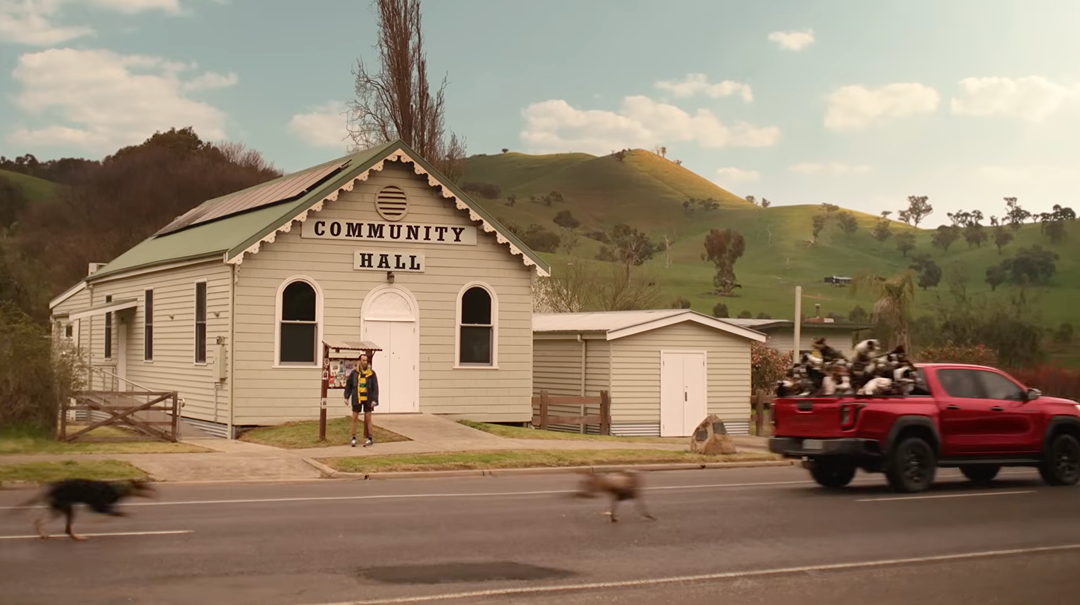
Re-entering the top 5, Toyota leans into a distinctly Australian kind of storytelling – grounded in familiar cultural cues and brought together by a fun, slightly absurd narrative.
"The Pied Piper" starts simply, with a single dog jumping into the HiLux. As the story unfolds, one becomes many, turning the piece into a playful, exaggerated spectacle that holds attention throughout and delivers an entertaining payoff.
Nearly two thirds of respondents said there are not many ads like this, pointing to its distinctiveness. Over half described it as entertaining and funny – a clear signal that the ad isn’t just noticed, but enjoyed.
The humour also lands because it’s rooted in recognisable cues – dirt roads, small towns, familiar Aussie characters – then pushed just far enough to feel fresh.
Importantly, the product sits at the centre of it all. The HiLux isn’t added at the end – it’s the thread that brings the whole story together. Every beat reinforces the role of the product, before returning to the familiar “Oh what a feeling” line, anchoring the story back to Toyota through a brand asset Australians already know and recognise.
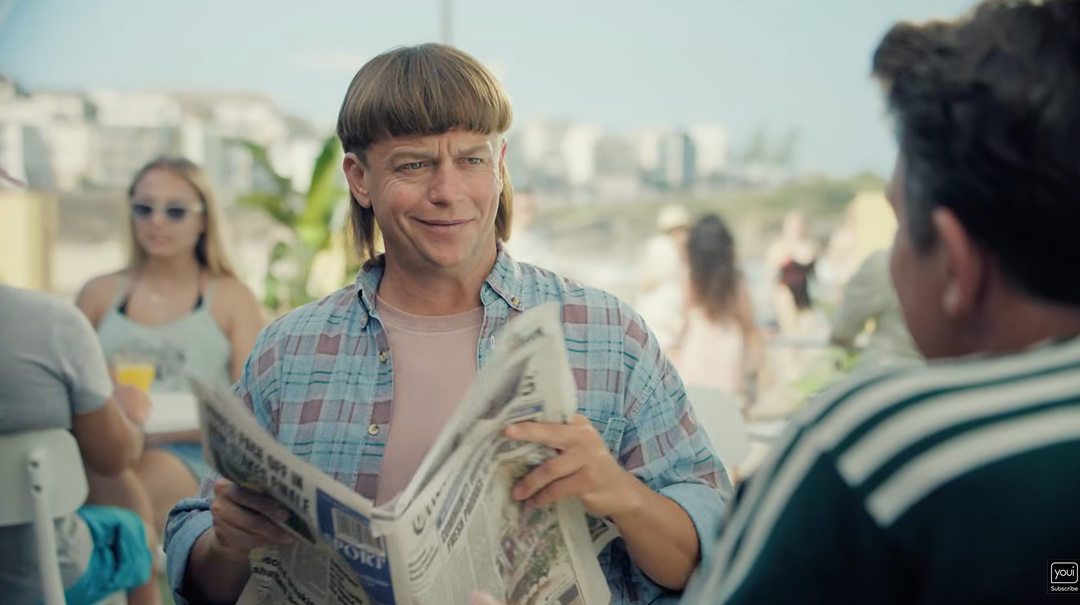
Youi’s latest advertising platform takes a more contemporary approach, tapping directly into cultural moments to make its message feel immediate and relevant.
Playing on the format and language of Married at First Sight Australia, the campaign reframes insurance as something more personal – “Find a partner who’s there when you need.” It’s a simple idea, but one that lands quickly because it borrows from a format audiences already understand.
This familiarity is key. By leaning into a recognisable cultural reference, the ad captures attention without needing a complex setup, while the slightly exaggerated characters and tone add a layer of humour. Over half of respondents described this ad as funny.
Importantly, this isn’t a one-off execution. Across the series – “Find a partner who’s committed to you”, “Find a partner who can’t wait to answer your call” – the same structure is repeated, reinforcing a clear and consistent message over time.
That consistency shows up in the results. A strong majority of respondents said it was easy to recognise the ad as coming from Youi, pointing to the strength of its brand linkage.
This favourite ad shows how cultural relevance and repetition can make a message easy to grasp, recognise, and remember.
Keeping its place in the top 5, Telstra’s “Wherever We Go” platform shows how consistency and distinctiveness build memory over time.
Rather than reinventing the wheel, this iteration builds on a familiar brand world – the laidback character, the offbeat animation style, and the now unmistakable whistle of Islands in the Stream. It’s a combination Australians have come to recognise instantly.
These distinctive brand codes are doing much of the heavy lifting. Nearly half of respondents also described the ad as entertaining, with others calling out its humour and soundtrack.
More importantly, it’s remembered. The characters, the movement, the earworm – they don’t just make the ad feel different, they make it feel unmistakably Telstra.
Over time, this consistency compounds. The “Telstra walk” has even found its way onto TikTok, with creators mimicking the now-iconic movement (one even taking it global) – a small but telling signal of how deeply the creative has embedded itself in culture.
This is distinctiveness in action – not through louder branding, but through building a world that people recognise, return to, and remember.

There is no single formula for what makes advertising work.
Across these ad platforms, different creative routes – humour, emotion, cultural relevance, world building, and distinctive brand codes – all deliver impact. What unites them is not how they look, but what they do: capture attention, create a meaningful response, and stay clearly linked to the brand.
The strongest common thread is distinctiveness. These are ads that feel different – and in doing so, earn attention and build memory.
• Start with a clear idea, not a format
• Choose a creative route (emotion, humour, relevance)
• Commit fully – consistency builds memory over time
• Ensure the creative links clearly back to the brand
• Distinctiveness matters more than category conventions
The ads that stand out don’t follow a formula – they stand apart.
In a crowded category, it’s not about doing what others do better. It’s about doing something different, and doing it well.
Want to understand what makes a favourite ad? Explore our Creative Edge framework, or learn more about how to capture attention with these five principles.
If you’re looking to understand how your campaigns are driving impact over time, get in touch to learn more about The Research Agency’s brand tracking program.
The Summer 2026 Favourite Ads Study was conducted in February and March 2026 across Australia (N=1,000) and New Zealand (N=1,000).
Emotion helps create stronger memory structures and deeper brand associations. Ads that evoke feeling – whether through storytelling, music, or relatable moments – are more likely to be remembered and linked back to the brand over time.
Consistency is critical for building memory over time. When brands use recognisable assets – such as characters, music, or visual style – across multiple executions, it becomes easier for audiences to identify and remember them. This consistency across the ad platform strengthens brand linkage and increases the long-term impact of creative.
To understand if advertising is landing as intended, it’s important to look beyond surface-level metrics and consider whether the creative is driving impact over time.
This means looking at how people respond to the campaign – whether they notice it, remember it, and correctly link it to the brand – as well as how it performs against business objectives. Does it shift perceptions, change behaviour, or help drive sales?
Measurement frameworks are most powerful when applied across the full campaign lifecycle. Early testing can identify ideas likely to earn attention; pre-launch analysis can highlight attribution risks while there's still time to act; and post-campaign measurement helps build a stronger brief for what comes next.
When integrated into a continuous brand tracking program, this provides a clear picture of how advertising is contributing to longer-term brand growth.

.png)






.jpg)



_11zon.jpg)

%20(1)_11zon.jpg)


.jpg)

.jpg)
edited.jpeg)