Australia’s latest favourite ads reveal how entertainment, distinctive brand assets and creative consistency can turn even the most functional categories into memorable advertising.
Australia’s latest favourite ads reveal how entertainment, distinctive brand assets and creative consistency can turn even the most functional categories into memorable advertising.

Talking cockatoos, space capsules and whistling animations. Australia’s latest favourite ads have one thing in common: they know how to entertain. More surprisingly, they’re doing it in categories not typically associated with having much fun.
Insurance and telecommunications dominate this wave’s top five. Brands selling practical products and services, often addressing things we’d rather not think about: breaking down on the side of the road, something going wrong at home. Not exactly the stuff of great entertainment.
Yet these brands are finding inventive ways to turn functional messages into something audiences genuinely enjoy watching.
There’s more going on here than a good laugh or clever creative. Look closer and the top five reveal something about the value of distinctive brand assets, familiar characters and creative consistency.
Great advertising doesn’t just give people something to enjoy – it gives them something to remember, and a brand to remember it by.
Being a favourite doesn't necessarily make an ad effective. But the qualities that make advertising enjoyable can also help make it work.
At The Research Agency (TRA), we use our Creative Edge framework to evaluate creative quality through three key measures:
Together, these measures show us what makes creative stand out, connect with audiences and build brands. And as this wave’s favourite ads show, there’s more than one way to do it.
Some products are easier to make interesting than others. Travel, food and retail have plenty of natural appeal. While insurance might seem less conducive to entertainment, Australia’s top ads suggest otherwise.

Budget Direct is well-known for bringing humour and hyperbole to their “Insurance Solved” platform, and their latest instalment “Splashdown” is no different. Respondents enjoyed the exaggerated, far-fetched storylines and recurring crew of Sarge, Jacs and their Jack Russell. As one respondent put it, these distinctive elements "play a huge part in making it memorable, as it's outside the norm."
Allianz takes a different route, drawing on a nostalgic, culturally familiar soundtrack and emotional storytelling to connect with audiences. Rather than making us laugh, it gives us something to feel, with 59% describing this ad as heartwarming.
It's a reminder that entertainment doesn't have to mean comedy. It can come from a surprising story, an emotional moment or a memorable character. For brands in functional categories, the opportunity is to move beyond what the product does and consider how the advertising makes people feel.
There’s a healthy dose of the unexpected in Australia’s top ads. We’re exposed to an enormous amount of advertising, much of which follows familiar formulas. So when something comes along that feels a little different, it has the opportunity to interrupt the ordinary and capture our attention – be remarkable.
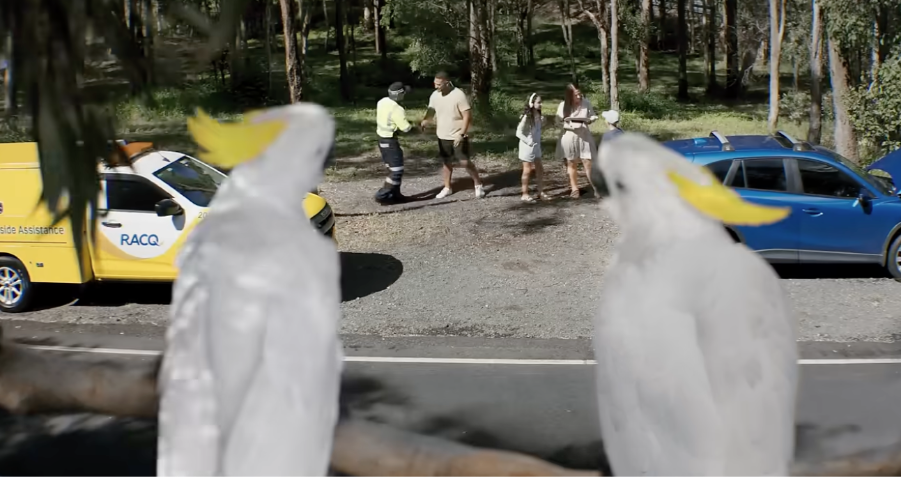
Take RACQ. There’s nothing particularly captivating about a car breakdown. But having two cockatoos commentate the scene adds a little more intrigue. Their human-like exchanges, paired with the distinctive yellow-car rescue, scored well above TRA norms for both Rewarding (49 versus 42) and Remembered (74 versus 64). And audiences clearly enjoy it: 59% described this ad as funny and 73% said they’d like to see it again.
Telstra's distinctive animated world offers another welcome dose of unusual. The characters' offbeat movements, paired with a catchy soundtrack, bring charm and personality to the storytelling. They're also recognisably Telstra, with 85% saying the brand was easy to identify.
Neither approach relies on realism, and that feels like part of the appeal.
These creative choices give audiences something unexpected, making familiar messages feel fresh. Perhaps standing out means being prepared to be a little strange.
Several of Australia’s favourite ads feature characters audiences have already spent time getting to know.
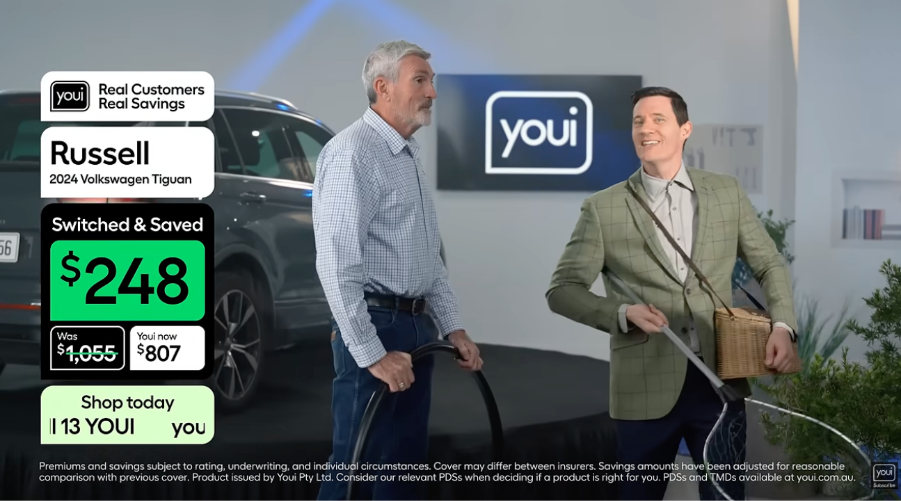
A strong build on Youi’s car interview format, Ed and Narelle have become familiar fixtures of the brand's Savers Showcase, bringing a more distinctive, character-led approach to its savings message. Budget Direct's Sarge, Jacs and their canine companion are similarly recognisable, navigating an evolving series of increasingly improbable situations.
These characters do more than make the ads entertaining. Over time, they become valuable brand assets. Their appearance, personalities and familiar dynamics provide cues that help audiences recognise who they’re watching, sometimes before the brand name even appears.
The results speak to the strength of those associations. Both Youi and Budget Direct both scored above the TRA norm of 64 for Remembered, with Youi scoring 70 and Budget Direct 75. Brand recognition was also strong, with 90% of respondents finding Youi's ad easy to recognise as belonging to the brand, compared with 98% for Budget Direct.
When audiences already know the characters, brands can invest less time in establishing who they are and more in the narrative. It’s a useful reminder that distinctive brand assets aren’t limited to logos and taglines. Characters, creative styles and recurring devices can all contribute to making a brand recognisable.
There’s a temptation in advertising to keep looking for the next big idea – a new campaign , or a new creative direction. But Australia’s favourite ads offer a compelling case for building on what already works.
Four of the top five also featured in the previous wave, suggesting that familiarity isn't holding these brands back. If anything, their established creative platforms are giving them room to keep audiences engaged.
For Budget Direct, that means new adventures for their trusty crew of three. For RACQ, new situations and personalities within its native animal universe. This wave’s winner, Telstra, continues to explore the possibilities of its distinctive brand world.
Consistency shouldn’t be confused with doing the same thing again and again. The strongest platforms leave room for fresh ideas, giving brands a recognisable foundation without limiting the stories they can tell – a balance between familiarity and surprise. Enough consistency to be recognised, and enough novelty to keep people interested.
So, what can brands take away from Australia’s latest favourite ads?
Firstly, no category is too functional to be entertaining. Secondly, a little creative bravery can go a long way. The bigger lesson may be that entertainment and brand-building can go hand-in-hand.
The strongest examples in this top five give audiences something to enjoy while reinforcing the characters, cues and creative worlds that make their brands recognisable.
Capturing attention is one thing. Making sure your brand gets the credit is another.
Is your advertising making an impression and building your brand?
Check out this wave's top five favourite ads, or download the free Insights Guide to learn more about the Creative Edge framework and what makes an ad stand out.
If you’re looking to understand how your campaigns are driving impact over time, get in touch to learn more about The Research Agency’s brand tracking program.
Emotion helps create stronger memory structures and deeper brand associations. Ads that evoke feeling – whether through storytelling, music, or relatable moments – are more likely to be remembered and linked back to the brand over time.
Consistency is critical for building memory over time. When brands use recognisable assets – such as characters, music, or visual style – across multiple executions, it becomes easier for audiences to identify and remember them. This consistency across the ad platform strengthens brand linkage and increases the long-term impact of creative.
At The Research Agency (TRA), we measure the effectiveness of advertising using the Creative Edge framework.
To understand if advertising is landing as intended, it’s important to look beyond surface-level metrics and consider whether the creative is driving impact over time.
This means looking at how people respond to the campaign – whether they notice it, remember it, and correctly link it to the brand – as well as how it performs against business objectives. Does it shift perceptions, change behaviour, or help drive sales?
Measurement frameworks are most powerful when applied across the full campaign lifecycle. Early testing can identify ideas likely to earn attention; pre-launch analysis can highlight attribution risks while there's still time to act; and post-campaign measurement helps build a stronger brief for what comes next.
When integrated into a continuous brand tracking program, this provides a clear picture of how advertising is contributing to longer-term brand growth.