

Cost of living. Community safety. Housing affordability. Environmental concerns. These are not niche issues. They are part of the cultural backdrop Australians live through every day.
The risk for brands is assuming that these shared pressures create shared responses.
Australians are culturally diverse, socially varied and value different things. This is what sits at the heart of Aussie Minds – TRA’s framework for understanding Australian audiences beyond demographics. Built from ongoing research with now more than 3,000 Australians and enriched with qualitative insight, Aussie Minds identifies six MindSets shaping how Australians see the world, make decisions and respond to brands.
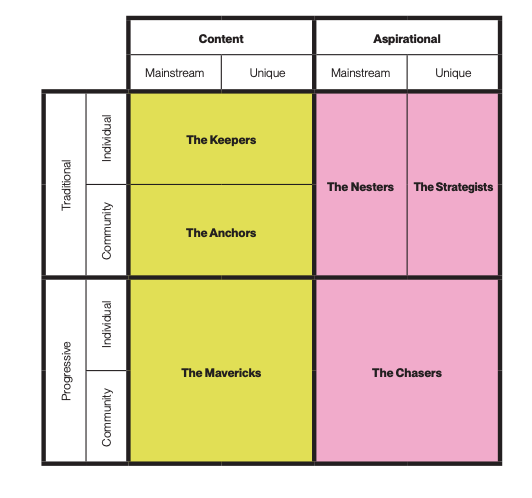
MindSets help explain why the same cultural tension can yield very different responses. One group may respond to pressure by seeking control and autonomy. Another may hold tighter to what is familiar and well-trusted within the community.
For brands, this distinction matters.
The question is not only: what are Australians worried about?
It is: how are different Australians making sense of those worries – and what do they need from brands in response?
When Australians were asked which topics feel important to them right now, cost of living sits at the top across every MindSet. But looking at this as one piece of data (“everyone is concerned about cost of living”) would be neglecting an important distinction: people respond to this concern in different ways – because shared concern does not mean shared experience.
For some Australians, cost-of-living pressure creates a need for control. They want clearer information and practical tools to help them make smarter, more informed choices. For others, it adds emotional load, and the response is about seeking relief from demand and making life feel more manageable.
This is where MindSets become useful – they help brands move beyond a broad statement like “Australians are under financial pressure” and towards a more useful question: what kind of communication or customer experience will feel relevant for this audience?
Cost of living may be the shared context, but what we know about each MindSet suggests that each segment filters that pressure differently.
In response to uncertainty and financial pressure, the Keepers are likely to look for reliability and proof. Their choices lean low-risk and familiar, with 8 in 10 sticking to brands and products they know work for them.
The Nesters are more likely feel the emotional weight of this pressure. Caring, comfort-seeking and cautious in their choices, their aspirations remain grounded in family, stability and building a manageable home life. For this group, value is not just about price. It’s about reassurance and reducing the load.
The Mavericks are a selective group. In brands, they value authenticity and substance. They are open to considering anything, but they won’t be told anything. In response to uncertainty, they are likely to respond to brands who respect their intelligence and give them something real to assess.
The cultural tension may be the same, but the route to relevance is not.
Environmental concern is another useful example.
Mavericks are the most likely MindSet to actively try to reduce their impact on the environment in everyday life, at 48%. Chasers – the only other progressive-oriented segment – sit second-highest at 37%.
Nesters approach this cultural tension differently. They are the most likely MindSet to say they care about the environment but that it doesn’t strongly influence their choices, at 56%.
Why does this contrast matter? Because it suggests that environmental concern is not simply ‘present’ or ‘absent’. It competes with other needs, pressures and priorities. For Mavericks, concern about the environment is more likely to become behaviour, which aligns with their values around autonomy, ethics, knowledge and personal meaning. In brands, we know they seek substance – not spin. They’re more likely to respond when sustainability claims are credible and connected to real action.
For Nesters, the care may be real, but the barriers are different. Their lives might feel more demanding or stretched, so environmental action may need to feel easier or more manageable before it becomes part of everyday behaviour.
For brands promoting a sustainability message, the implication is important: don’t assume concern is enough to promote action.
A sustainability message that works for Mavericks may not work for Nesters. One audience might need evidence of ethical sourcing and practical ways to act on their values. Another looks for reassurance that sustainable choice will not add cost, complexity or effort.
AI is another cultural shift Australians are processing in different ways.
Nationally, Australians are more nervous than excited about what AI could mean for the future. But the balance shifts significantly by MindSet: 46% of Chasers say they feel excited about what AI could bring in the future, while 78% Keepers feel nervous.
This isn’t a simple split between optimism and fear. Even among Chasers, more than half still feel nervous about AI. But the difference shows how the same technology can carry different emotional meanings.
For Chasers, AI may represent a faster or more personalised future. While for Keepers, AI might feel risky or destabilising – they need more proof and reassurance before they feel comfortable.
The lesson for brands is not to treat AI as universally exciting or universally threatening. The same innovation can signal progress to one audience and unease to another.
Cultural tensions are useful signals, but they're not strategies on their own.
Knowing that Australians are concerned about cost of living, the environment or AI is only the starting point. Brands also need to understand how different audiences interpret those issues and what kind of response will feel relevant.
This means asking sharper questions.
Not just: what issue matters to Australians right now?
But: how does this issue land with different MindSets – particularly the ones relevant to my brand?
Not just: what message should we put into market?
But: what does this audience need to feel reassured and motivated to act?
Australians are living through many of the same pressures. But they are not experiencing them through one shared lens.
This is why demographics alone are not enough. They can tell us who people are on paper, but they don’texplain how people see the world, what they value or what they need from brands.
Aussie Minds helps brands understand what sits beneath.
Because culture may set the conditions, but MindSets shape the response.
Want to know which MindSets matter most for your brand? Explore the Aussie Minds research or get in touch with our team.








.jpg)



_11zon.jpg)

%20(1)_11zon.jpg)


.jpg)

.jpg)
edited.jpeg)