
1. Innovation succeeds when it aligns with emotion, not just logic.
2. Rituals reveal the moments and feelings that drive behaviour.
3. Brands win when they enhance rituals rather than disrupt them.
1. Innovation succeeds when it aligns with emotion, not just logic.
2. Rituals reveal the moments and feelings that drive behaviour.
3. Brands win when they enhance rituals rather than disrupt them.
.jpeg)
Innovation succeeds when it understands how people really behave, not how we wish they behaved. Rituals offer a powerful lens for understanding the emotional moments people return to, and the role brands can play within them.
Whether we’re talking about product or service innovation, the goal is the same: to get people using it habitually. To pick it up at the supermarket once, twice, or even three times more. To migrate to new software. To revisit an app. It’s tempting to think that if we design something “good enough,” people will see it, buy it, and keep coming back.
But people are not that predictable. They are both habitual and impulsive, driven by emotion first and logic second. They often have intentions that don’t match their actions, and they tend to stick with the familiar until something new feels comfortable.
In other words, people don't always choose what makes the most sense. They choose what feels right.
That new product or service might rationally improve their life, but humans often act from a place of emotion and instinct rather than logic. And rationality in the face of irrationality is a losing battle.
So, while brands might aim to design something functional that solves a core problem, ignoring people’s emotional, instinct-driven nature is likely to end in failure. To get people using, adopting, or buying something new and returning to it, it must be designed with irrationality and emotion in mind.
This is where rituals come in. Rituals refer to established, repetitive actions that hold personal or cultural significance. They anchor people through change and are increasingly important in a world where technology can erode the stability people crave.
The power of rituals is that while they may be driven by emotion and sometimes entirely irrational, they are also remarkably predictable once you understand them. This combination makes rituals a powerful foundation for innovation because they tap into moments that really matter to people in their daily lives.
For brands, this makes rituals a powerful source for innovation. They reveal the emotional needs, behaviours and moments that products, services and customer experiences can be designed around.
But a brand cannot simply insert itself into someone’s ritual without permission. And if you do try to claim a place in an existing ritual, you cannot undermine what makes that ritual special: its emotional core.
People will only accept a brand's role in a ritual if it preserves the feeling they seek from that moment.
Acceptance depends on whether the core feeling survives. People care about form. If a new format, platform, or product preserves the emotional payoff – the calm, the connection, the sense of occasion – they’ll accept it. If it doesn’t, convenience or clever design alone won’t save it.
There are countless examples of rituals driven by emotional, often irrational needs. Take candles, for instance, embedded in rituals across cultures, from meditation and prayer to simply winding down at night. Candles carry meaning far beyond their function. In the early 2000s, electric candles flooded the market: coloured ones, rechargeable ones, ones promising a “real flame.”
Rationally, this makes sense: safer, longer lasting, and more convenient. But they fail to preserve the emotional outcome people seek when lighting a candle. The tiny moment of awe as the flame flickers to life and the sense of calm that comes from a small, deliberate act. Preserving the emotional outcome of an existing ritual is essential.
When people reject innovation, it's often not because the new solution is worse. It's because something important about the feeling has been lost.
The lesson for brands is simple: whether you're changing an existing behaviour or introducing a new one, emotion still matters.
When a brand wants to establish a new ritual, the emotional outcome is just as critical. The difference is that instead of preserving an existing feeling, it needs to create one. Spotify Wrapped is a perfect example. It established a yearly ritual around something entirely new.
Every year, millions of people return to Wrapped because it delivers something emotional: nostalgia, reflection, identity and social connection.
The summary itself isn't the point. What matters is what it represents: a chance to reflect, share and say something about who we are. That's what keeps people coming back.
For brands, rituals can help transform products, services and customer experiences into moments people return to habitually and willingly.
But to create or integrate a ritual effectively, it’s essential to resist the urge to optimise at the expense of everything else. Instead, the task is to lean into the irrational nature of a ritual and focus as much on the feelings it evokes as on the features it offers.
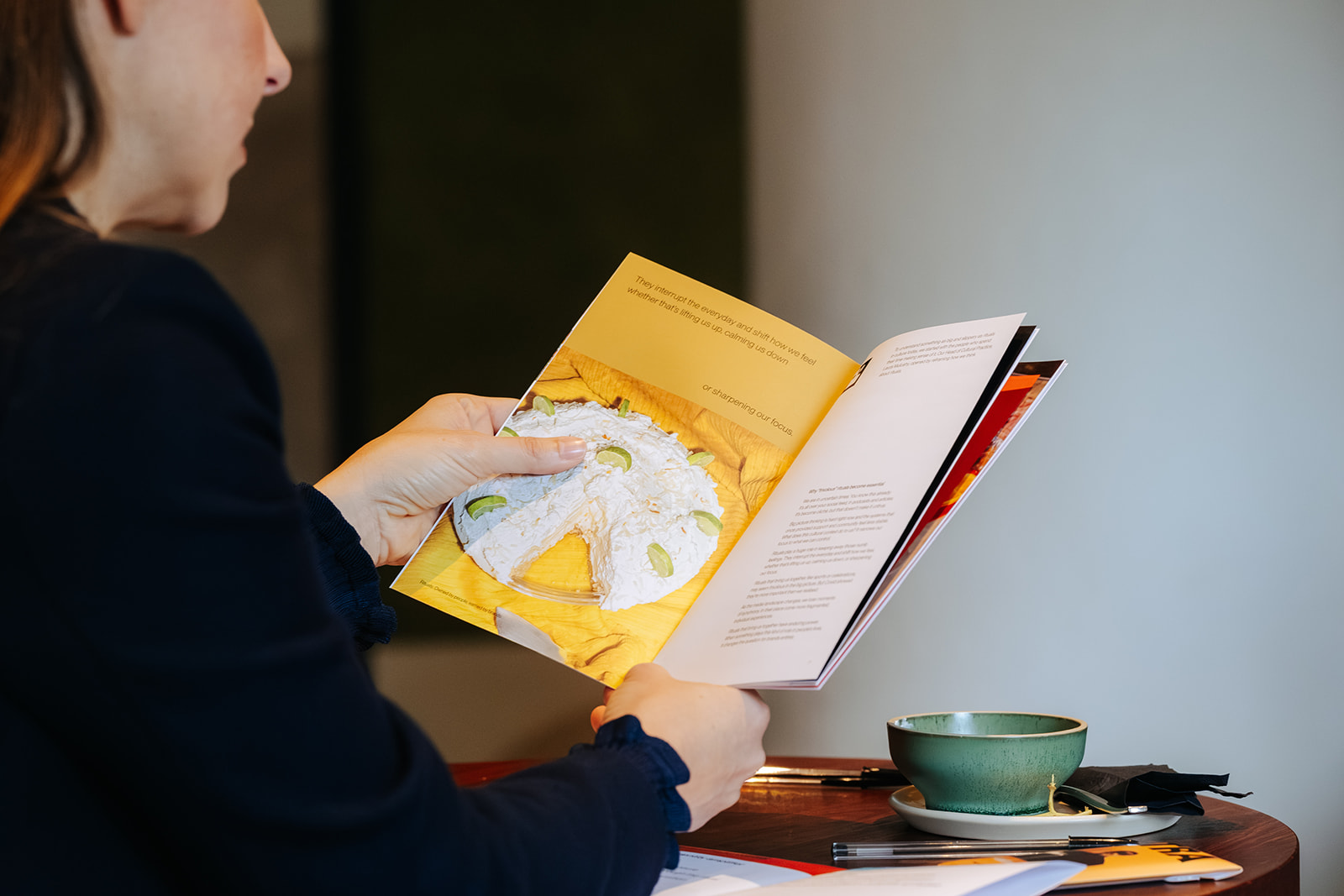
TRA's latest Rituals study explores the moments people return to for meaning, stability and connection, and what this means for brands looking to earn a place within them.
Explore the key findings or download the report to explore the findings and uncover opportunities for product innovation, customer experience, brand strategy and growth.
.png)
.png)




.jpg)


_11zon.jpg)


%20(1)_11zon.jpg)

.jpg)

edited.jpeg)
.gif)