
.jpg)
Bad news, brands: you’re not the hero of this story.
Rituals do more than structure our days – they carry meaning and they help us feel like ourselves.
Brands have become very good at demanding attention. Every moment is treated as an opportunity to engage, personalise, interrupt, optimise, or activate. But rituals reveal something uncomfortable. Not every meaningful moment needs a brand in the middle of it. Because rituals were never really designed for brands in the first place. They exist for people.
A morning coffee is not always about coffee. A run is not always about fitness. These small, repeated acts help people manage their mood, their identity and their place in the world. They offer a sense of control and certainty in what feels like an increasingly uncertain world.
Rituals have helped humans create order in uncertain environments. They create rhythm in lives that otherwise feel fragmented. These moments can look small from the outside. But psychologically, they do important work. They help people feel in control.
That may explain why rituals feel increasingly important right now. According to The Research Agency’s (TRA) Rituals study involving 2,000 people across Australia and Aotearoa New Zealand, 55% of Australians and 49% of New Zealanders believe rituals will become more important in future.
Much of modern marketing and customer experience is built around attention. Be visible. Be memorable. Create engagement. Own the moment.
These moments already have a hero: the person. The hero is not the brand. Rituals are not empty spaces waiting for brand participation. The role of a brand in a ritual is not always to be remembered. Sometimes it is simply to be reliable.
Brands often mistake access to a ritual for permission to lead it. The most powerful ritual experiences are often the least interrupted.
In these moments, a lot of the traditional rules of customer experience go out the window. CX traditionally optimises for engagement, efficiency, personalisation, memorability. Those principles make sense in transactional or exploratory moments. But ritual moments operate differently. People are often not looking for stimulation or novelty in these moments. They are looking for rhythm, emotional regulation, predictability, control.
Don’t disappear entirely. Disappear appropriately.
Traditional CX might say remove unnecessary steps. But in a ritual, the unnecessary steps may be key to that ritual. Traditional CX often celebrates surprise and delight. But rituals are usually stabilising moments.
The argument here is not friction vs seamlessness – it’s control vs interference. The issue is not whether a step is inefficiency, it’s whether the brand belongs there at all. Not all rituals want brand engagement. Some need reliability. Some need quiet. Some need space and total restraint. They need human leadership, not brand leadership.
Good CX is not about inserting yourself into every meaningful moment. It is about knowing your role, when to step back, and when to leave well enough alone.
This role can differ depending on the type of ritual. A public or shared ritual, which feeds on collective energy and belonging, might require a more leading or facilitating role from a brand, while a more private reflective ritual requires protection or for a brand to disappear. It’s a spectrum, with the role of the brand being to lead, enable, support, protect or disappear into the background.
The key thing people do want is consistency. Because in ritual spaces, consistency is psychological protection. Surprises are not just operational failures – they disrupt emotional rhythm. People want predictability and control over their rituals.
In Australia, 59% of people say they want brands to simply be there consistently so they can enable their own rituals – in the same way you might expect your local coffee shop to be there and accessible when you need them, rather than offer you deals every visit.
Rituals reveal that consistency is emotional. Brands often think consistency is operational. But in rituals, consistency creates emotional safety. The same way “hand-stitched” gives the impression of quality, consistent rituals give the impression of safety.
When rituals need reliability or coordination, brands should support and enable, removing friction and increasing ease of engagement. Step back when the moment is solemn, sacred, private, or emotionally vulnerable. Allow people to find their own meaning and cadence. For example, Mastercard enables key moments but is never the star of the show – it’s invisible but crucial for the completion of many rituals.
For cultural or shared moments, facilitate connection, but don’t be the centre of attention. McDonald’s does this well through its enablement of road trips, and post-event moments with family and friends.
Match your level of visibility to the emotional role of the ritual. The more emotionally sensitive the ritual, the more restraint matters. Protect the rhythm before adding to it. The sequence and predictability may matter more than making the process more efficient.
So, ask yourself: is your brand supporting people’s rituals, or trying to take centre stage in them? Because if it’s the latter, you’re probably not adding meaning. You’re getting in the way.
Curious about the rituals shaping people’s lives, and the role brands can meaningfully play within them?
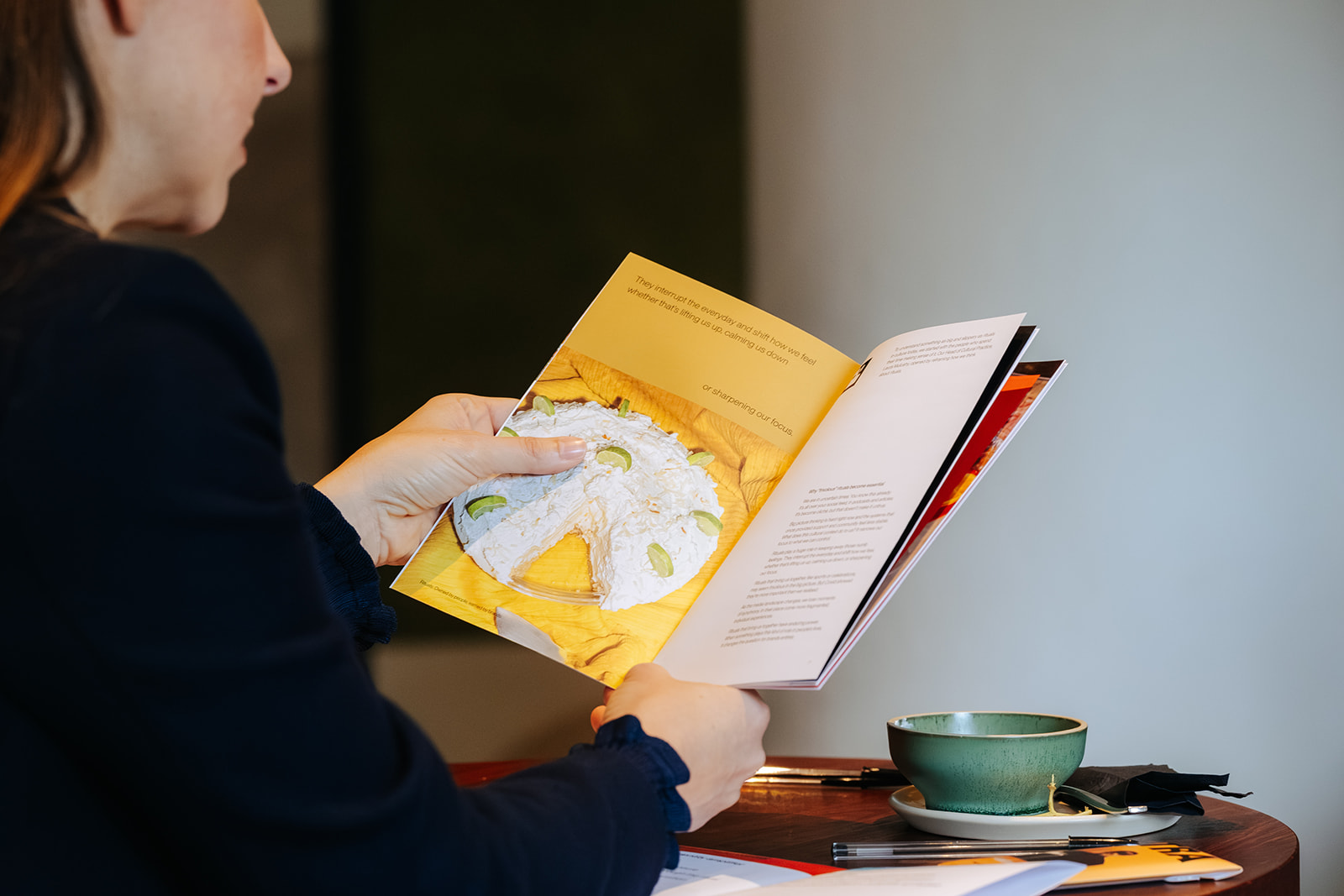
Download the full Rituals report or read more on why rituals matter now. If this has sparked a question, challenge, or opportunity for a brand, get in touch here.

.png)






_11zon.jpg)


%20(1)_11zon.jpg)

.jpg)
.jpg)
edited.jpeg)