

The alarm set for 4:45am. The jersey pulled from the back of the cupboard. The group chat firing before kick-off. The same seat on the couch. The same pub. The same snacks. The same person who always says, “I don’t want to jinx it.”
The World Cup is more than a tournament. It is one of the world's most visible examples of rituals in action. Rituals can be personal, emotional, social, sensory and deeply tied to identity. Like sport, they can give people a way to feel part of something bigger, while still making the experience distinctly their own.
This is what makes sport such fertile ground for rituals, whether it’s the World Cup, the NBA Finals, or a local game on a Saturday morning. The game itself matters, but so does everything around it: the pre-match routine, the people you watch with, the socks you wear for luck.
These moments are easy to dismiss as habits or fan behaviour. But rituals do more than repeat. They carry meaning.
In The Research Agency’s latest major study, we identified five core motivations that drive rituals: recovering a feeling of control, mindful attention, identity signalling, collective effervescence and sensory immersion.
Think about why you watch your team every weekend. Maybe it gives you a sense of control amid the chaos, or a moment of full presence, where everything else falls away. A ritual lets people show who they are and who they belong to. It can create the electric feeling of riding the highs and lows together. For many, it is also deeply sensory: the sound of a roaring crowd, the stadium filled with your team’s colours, the taste of the same match-day food, that anticipatory silence before a penalty.
The World Cup makes these motivations visible at scale. Millions of people are participating in similar rituals at the same time, yet the meaning remains deeply personal. For some, it’s about national identity. For others, it’s family connection, escape or nostalgia. For many, it also inspires a sense of collective effervescence.
Collective effervescence is the emotional high that comes from being swept up in a shared experience. It creates a sense of belonging, energy and trust between people, even if only for a moment. You see it when fans spill into the streets after a long-awaited win, like the scenes around New York after the Knicks’ historic championship. Or, closer to home, when Fed Square erupted after Australia’s World Cup win over Türkiye.
Retired player Craig Foster shared his reflections on being at Fed Square as a fan, not as a player. It was his first experience at a live site in Australia, and what stood out was the emotion and support in the crowd. In these moments, people are not just watching the game. They are feeling it together.
These moments create an opportunity for brands, but a challenge, too. Rituals belong to people, not brands. Brands can be invited in, but that invitation is earned, not assumed.
Some brands earn their place by making the ritual easier. In sport, this role is often functional, but it is not emotionally neutral. If someone has planned their morning, gathered their friends, prepared the snacks and built anticipation around the match, friction matters. A failed stream, a confusing ticketing process or a slow payment does more than create inconvenience – it disrupts the ritual.
This is where brands like Visa can play an important role. As a FIFA payment technology partner, its value sits less in being the emotional centre of the tournament and more in helping the surrounding experience work smoothly. The role is infrastructural: making the moments around the match easier to move through.
When rituals become traditions, people expect them to endure. Brands that support these moments help preserve the conditions that make participation possible. When you make the ritual frictionless, you become part of what allows it to happen.
Some rituals need guardians. In community sport, this might be the club that has run the same event for 30 years or the volunteer who keeps the tradition alive. At a World Cup level, the same principle applies. Fans want the event to feel accessible, fair, exciting and shared.
In Australia, SBS is a good example of a guardian of access. Its long-standing FIFA broadcasting partnership has helped make some of the world’s biggest football moments available to generations of Australians. And with Santo Cilauro and Ed Kavalee back at the desk for Cup Fever this year, SBS is not only showing the matches, but helping shape the ritual around them. It gives new and old generations of Socceroos fans something to huddle around each night – a place to watch, gossip, laugh, cry and poke fun at the game together.
In doing so, SBS has become part of the ritual infrastructure around the tournament, helping ensure fans can continue to gather, watch and participate.
The strongest brands in this space understand that trust is built by protecting what makes the ritual possible.
Some brands earn their place by helping people express the ritual. This is where sport becomes identity. The jersey, the scarf, the limited-edition packaging. The object someone keeps long after the final whistle.
Coca-Cola plays a ritualised role because it sits naturally within the sensory and social environment of sport. A drink in hand during a match, cans on the table at a viewing party, limited-edition packaging that marks the tournament – these are not the main event, but they can become part of how people participate. They help turn fandom into something visible, shareable and remembered, creating a tangible connection to the teams, stories and emotions that make the tournament meaningful.
The lesson is not that every brand needs a collectible or campaign. It is that brands can amplify rituals when they give people something to hold, share, wear, taste or remember.
The most powerful role is also the hardest to earn. The difference between interruption and participation is simple: participation builds on behaviours that already exist.
McDonald’s is a practical example because it builds from behaviours that already exist around sport: the post-match meal, the easy option for families, the fries shared during extra time, the sweet thing after a win or a loss.
Its FIFA World Cup 26™ activity gives these familiar behaviours a tournament layer. Limited-time meals make matchday feel like an occasion. Collectible cups and Happy Meal toys give fans something to keep and share. Digital stickers and in-game rewards extend the ritual beyond the restaurant, into the spaces where fans already collect, play and connect.
That is the difference between interruption and participation. The brand is not asking people to stop what they are doing. It is fitting into the rituals already surrounding matchday: gathering, sharing, feeding the family, collecting and celebrating.
The World Cup is a useful reminder that sport is not just watched – it is ritualised.
People build meaning around it through repetition, emotion, identity and connection. They protect these moments because they do important work. They create structure in the week, connection between people and a sense of belonging that can be hard to find elsewhere.
For brands, this changes the role they play. The opportunity is not to own the moments, but to understand why the moments matter.
Are you making the ritual easier? Are you protecting what makes it meaningful? Are you helping people express who they are? Are you participating in a way that feels invited rather than imposed?
Because when a brand supports someone’s ritual, it does not just deliver a product, service or message. It becomes part of how the moment happens.
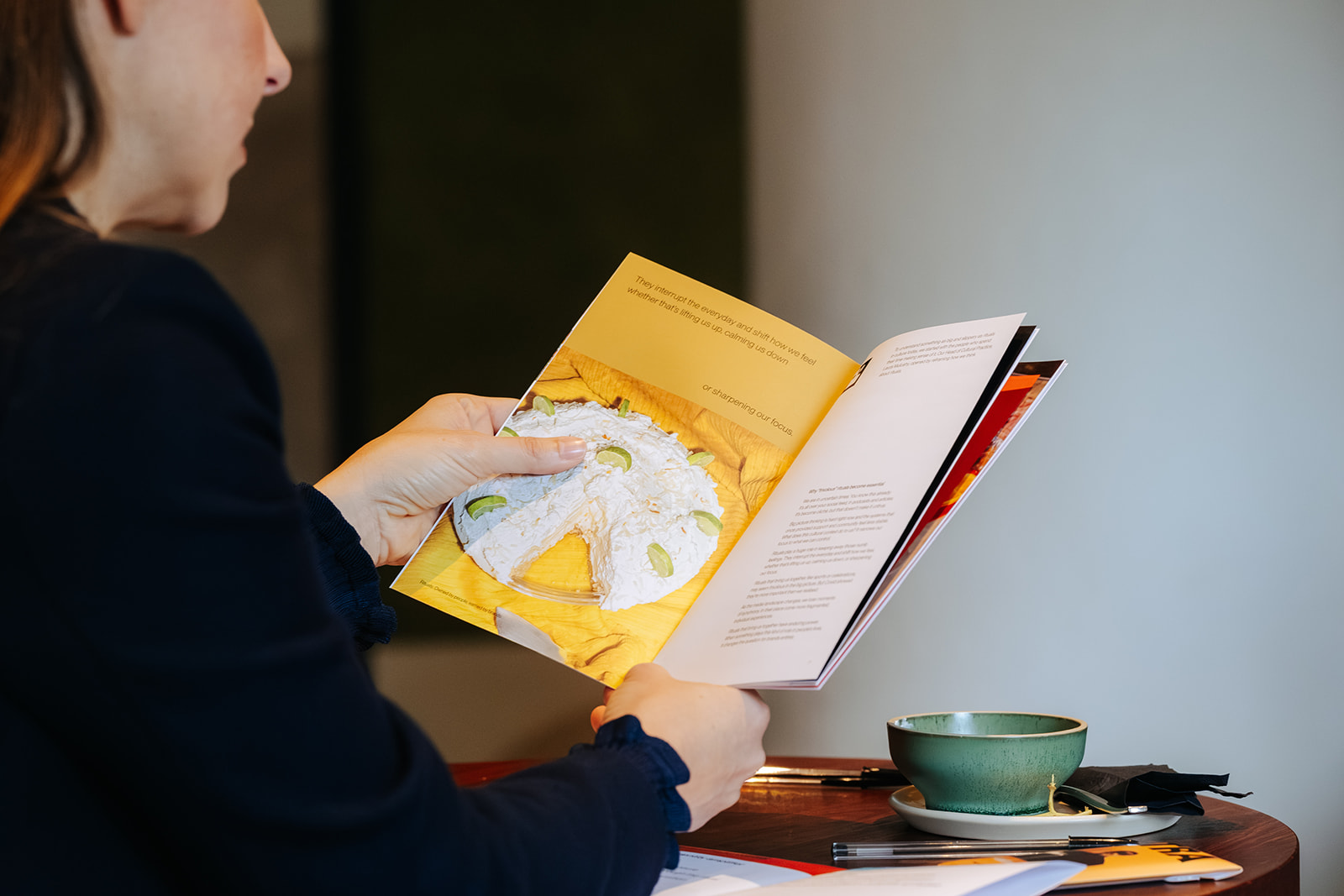
Curious about the rituals shaping people’s lives, and the role brands can meaningfully play within them?
Download the full Rituals report or read more on why rituals matter now. If this has sparked a question, challenge, or opportunity for a brand, get in touch here.






.jpg)


_11zon.jpg)

%20(1)_11zon.jpg)


.jpg)

.jpg)
edited.jpeg)