
1. Rituals help people create meaning, stability and connection.
2. Rituals build identity and belonging, not just behaviour.
3. Brands succeed when they support rituals, not interrupt them.
1. Rituals help people create meaning, stability and connection.
2. Rituals build identity and belonging, not just behaviour.
3. Brands succeed when they support rituals, not interrupt them.
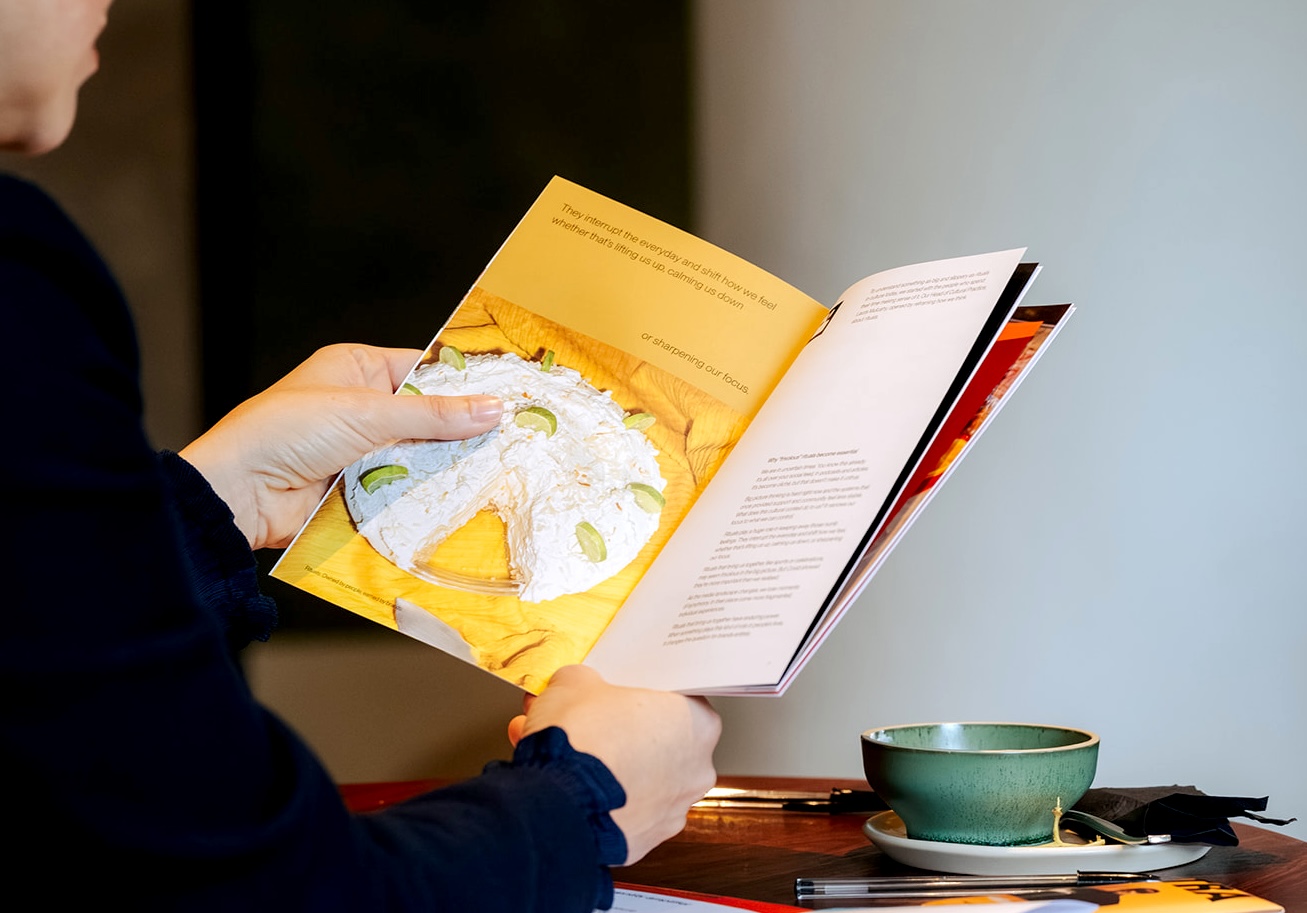
The zine was so popular at The Research Agency's (TRA) Rituals events that we've published it here. Part research summary, part collection of perspectives, part thought experiment, the zine unpacks what rituals tell us about modern life - and what brands need to understand if they hope to play a meaningful role within them.
Knowing people is The Research Agency's (TRA) art, underpinned by science. We look at what’s already known through behavioural science, brand, culture, customer experience, innovation and communications, then go looking for what sits underneath it. At TRA, we call these uncommon truths. The patterns in everyday life that show up in behaviour first, but only reveal their meaning when you slow down enough to notice them.
This zine applies that lens to rituals.
Rituals are repeated human behaviours that carry meaning. Not habits. Not routines. Something more deliberate. They small acts people use to create structure, identity and emotional grounding in a world that rarely stays still. They're how people create uncertainty when everything feels uncertain. Once you start looking at people this way, rituals show up everywhere.
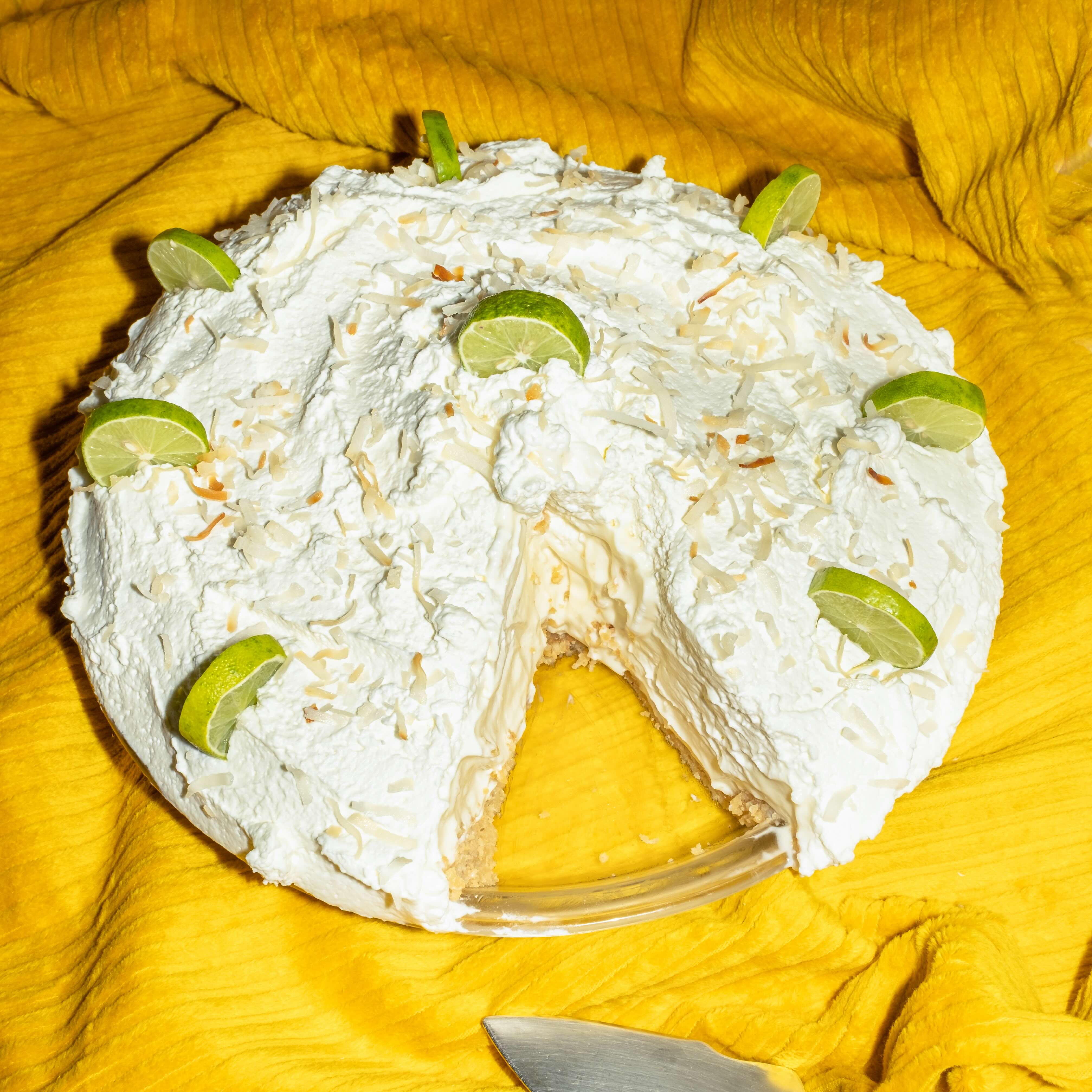
They interrupt the everyday and shift how we feel whether that’s lifting us up, calming us down or sharpening our focus.
To understand something as big and slippery as rituals in culture today, we started with the people who spend their time making sense of it. Our Head of Cultural Practice, Laura Mulcahy, opened by reframing how we think about rituals.
We are in uncertain times. You know this already: it’s all over your social feed, in podcasts and articles. It’s become cliché, but that doesn’t make it untrue.
Big picture thinking is hard right now and the systems that once provided support and community feel less stable. What does this cultural context do to us? It narrows our focus to what we can control.
Rituals play a huge role in keeping away those numb feelings. They interrupt the everyday and shift how we feel, whether that’s lifting us up, calming us down, or sharpening our focus. Rituals that bring us together, like sports or celebrations, may seem frivolous in the big picture. But Covid showed they’re more important than we realised.
As the media landscape changes, we lose moments of synchrony. In their place come more fragmented, individual experiences.
Rituals that bring us together have enduring power. When something plays this kind of role in people’s lives, it changes the question for brands entirely.
Read more about why "frivolous" rituals matter for brands here.
So we asked Phil Mecredy, Business Director and Brand Lead, to explore why rituals are often misunderstood by brands as a space for engagement.
Rituals are complete systems, with a job – people use them to create order, to manage how they feel, to signal something about who they are, or simply to get through the day in a way that feels manageable.
No one wakes up hoping their routine has been “improved” by a brand. They just want it to work.
The same ritual can serve different roles depending on the person and context. But the environment is consistent. Life feels harder to manage, with more pressure, more trade-offs, and less control. Rituals are one response to that.
Where brands tend to go wrong is assuming they need to do more in those moments. More presence. More messaging. That often makes them noticeable, not useful.
When a ritual is doing important work, the expectation of brands is quite basic: show up consistently, don’t add friction, and don’t interrupt what already works.
The brands that get this right are clear on where their meaning fits.
Because if you try to make yourself the point of someone else’s ritual, you’ve probably misunderstood the ritual entirely.
And that misunderstanding often comes from treating all repeated behaviour as if it’s the same thing.
Which it isn't.
Read about how rituals can become Category Entry Points (CEPs)here.
Behavioural Insights Director, Lindsey Horne, knows that treating rituals like habits or routines can be a stumbling block for organisations designing for people. Why does this difference matter?
At first glance, habits and rituals look the same. Both are repeated behaviours that follow a familiar loop: a cue or trigger prompts us, we act, and the behaviour is rewarded and reinforced.
Habits are built for efficiency. They operate subconsciously, reducing cognitive load and helping us move through everyday life without thinking.
The goal is simple: make the behaviour easy enough and repeatable enough that it becomes automatic.
Rituals still carry repetition, but with meaning and significance.
Rituals are conscious, intentional, and emotionally loaded.
Walking home with music or a favourite podcast can become protected “me time”. Friday night drinks with the same group of friends can be more than a calendar event, but about belonging. A favourite family meal at the beach is not just a repeated Sunday dinner – it is connection, memory, and something to return to.
These are moments people feel, prioritise, and protect. The reward is intrinsic, grounded in connection, identity, and emotional reset.
The question for brands?
Are you building something invisible, or something people return to?
Design for efficiency and you build habits.
Some behaviours are best designed as habits. Filing taxes, paying bills, remembering appointments. In these instances, success comes from reducing effort and removing friction. The less people think, the better.
Other actions demand more. Behaviours tied to wellbeing, connection, identity, or progress are more powerful when they become rituals.
Design for meaning and significance and you build rituals.
Read more about the difference between habits and rituals here.
Daniel Talbot, Strategy and Innovation Director, argues that the value of an innovation often depends on whether it fits into the rhythms of people’s lives.
Rituals refer to established, repetitive actions that hold personal or cultural significance – moments that shape how people experience the world. They carry emotional weight and help anchor people through change.
To get people using, adopting, or buying something new, it has to mean something to them. Not just functionally, but emotionally too.
It might mean ideating from a ritual.
This is about enhancing an existing ritual, because new ideas feel helpful when they match what someone is already doing – in purpose, timing, and feeling. A product that slots in without friction and serves the same emotional goal the ritual serves. This starts with understanding what people already do and why it matters.
It might mean ideating for a ritual.
On the flip side, creating a new ritual requires a deeper understanding of people, culture, and category. It’s about finding moments where a brand can authentically add value.
The caution is not to force it. People are quick to call out anything that feels manufactured.
And once ideas enter the world, they meet people in real moments, with real expectations.
Read about how rituals can drive successful innovation here.
Rituals are emotionally loaded. They help us maintain a sense of self in a fragmented world. Daniel van Vorsselen, Business Director and CX Lead, reminds us that people aren’t looking for brands to interrupt them.
I’m an early morning coffee-alone person. Not because I’m obsessed with coffee, but because that quiet cup gives shape to the start of my day. It steadies me. My Saturday market trip does something similar – it grounds me. When I run, the soundtrack matters. Some days it’s Pink Floyd, other days it’s early 2000s pop.
Too often, brands treat rituals like stages they should stand at the centre of. But most rituals aren’t asking for a centrepiece... they already have one: the person, the people, and the reason the moment exists at all.
In ritual moments, small design choices can have an outsized effect. But not all rituals want engagement. Some need reliability, quiet, space or restraint. They need human leadership, not brand leadership.
Good customer experience is not about inserting yourself into every meaningful moment; it’s about knowing what your role is – when to be present, and when to leave well enough alone.
In our Rituals study, we found that 59% of people in Australia and 49% people in New Zealand want brands to simply be there consistently so they can enable their own rituals.
Headspace does this well. It doesn’t demand constant attention. Instead, it supports the moments people choose to engage, whether that’s five minutes or thirty.
For brands?
- Support and enable when the ritual needs reliability or coordination.
- Remove friction, step back when the moment is solemn, sacred, private, or emotionally vulnerable. Allow people to find their own meaning and cadence.
- For cultural, shared moments, facilitate connection – don’t be the centre of attention.
Ask yourself: is your brand supporting people’s rituals, or trying to take centre stage? If it’s the latter, you’re probably getting in the way.
Most brands don’t fail because they’re absent from rituals. They fail because they assume they belong in them.
The question isn’t whether rituals exist but whether brands know when to stay out of them.
Read about brands' roles in personal rituals here.
Colleen Ryan, Partner – brings us home.
Rituals are the personal infrastructure people use to navigate a changing world.
They regulate emotion, reinforce identity, and create rhythm.
When brands are part of a ritual, they are embedded in a meaningful, emotionally loaded and valuable part of people’s lives.
If your brand plays a part, it adds value because ritual artefacts transfer meaning and products become like sacred objects. Rituals involving customer experience can be enhanced or diminished by it.
People own their rituals and will give you permission to be involved, but only if you play by their rules.
Explore the research - download the full Rituals report.


.png)







.jpg)


_11zon.jpg)

%20(1)_11zon.jpg)


.jpg)
.jpg)
edited.jpeg)