
1. AI is changing how shoppers discover brands, but trust still drives the final decision.
2. Different shoppers need different signals to feel confident, reassured and ready to choose.
3. Physical stores and human interactions remain powerful ways to build trust and reduce uncertainty.
1. AI is changing how shoppers discover brands, but trust still drives the final decision.
2. Different shoppers need different signals to feel confident, reassured and ready to choose.
3. Physical stores and human interactions remain powerful ways to build trust and reduce uncertainty.
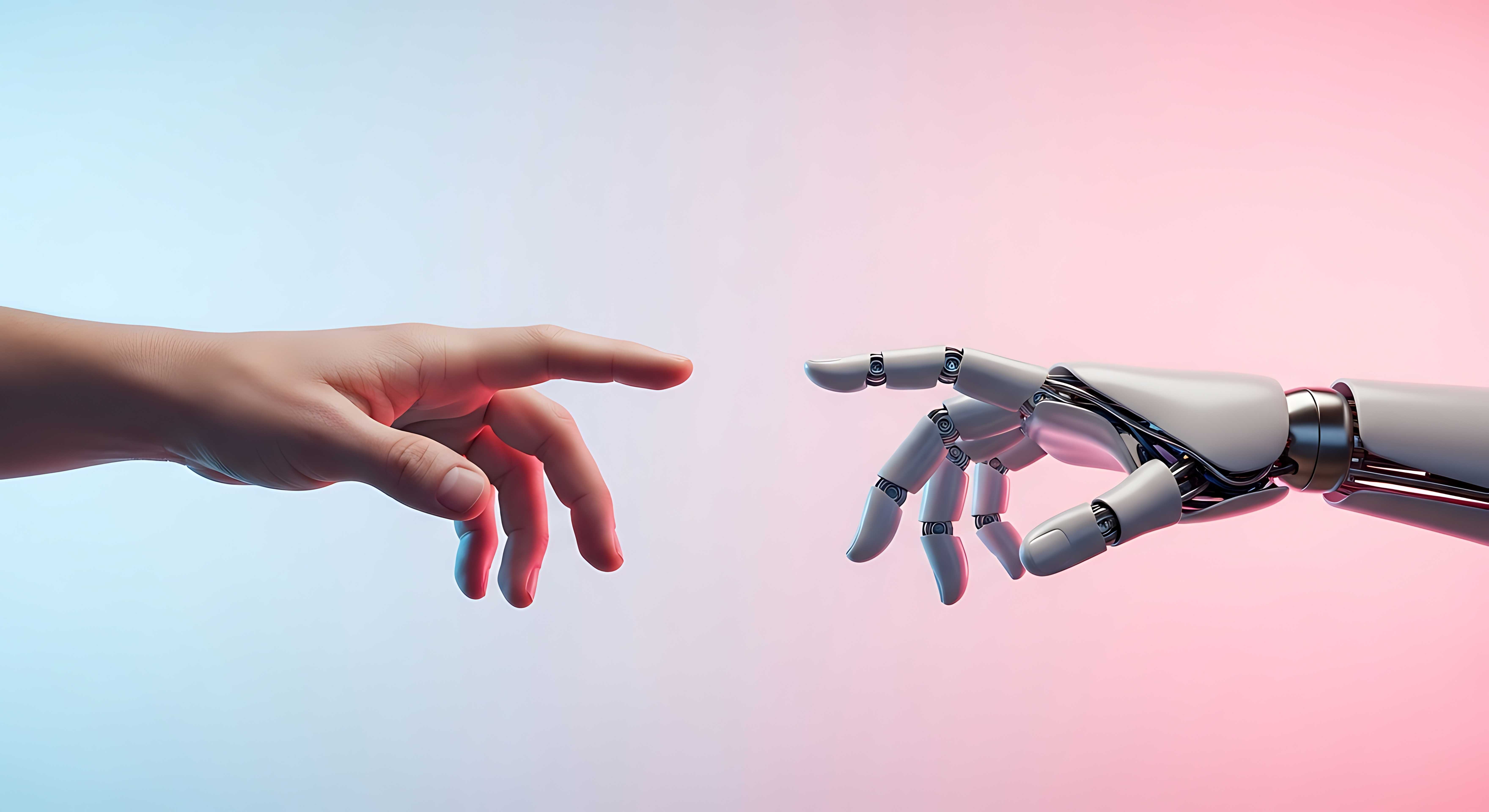
Retail is at a crossroads.
The path to purchase is fragmenting. AI is reshaping how people search and discover products. At the same time, cost-of-living pressure is making shoppers more value-conscious, more selective, and more likely to scrutinise brands – from their values and behaviour to their offering and customer experience journey.
For retailers, the temptation is to see this as a tech problem. How do we show up in more places? How do we optimise for new discovery channels? How do we prepare for automated recommendations and increasingly personalised paths to purchase?
These questions matter, but they are only part of the picture.
AI might be changing how people discover brands and products, but it doesn’t remove the inherently human need for trust.
For brands and retail marketers, the challenge is not just how to reach shoppers in more fragmented environments. It’s how to understand what they need before they feel ready to choose.
A deep dive into AEO by TRA’s Head of Product Marketing shows us that AI can speed up research and help people navigate and compare options, particularly in high-involvement purchase journeys. But AI only takes buyers so far.
Goodhart’s Law is starting to play out when it comes to retail. Early searches via AI platforms would crawl data from community boards and review sites like Reddit, giving you a summary of opinions from real people who have taken the time to share tips, debate pros and cons and share personal experiences of products and services.
However, like all good marketers do, they optimise for visibility and reach. But when a measure becomes a target, it ceases to be a good measure. This is what we are seeing now. Sites like Reddit, once a gold mine for ‘human’ AI content, are now increasingly being flooded by slop – marketers seeding the web with bots and manufactured positive posts in the hope that those signals are picked up and surfaced in AI-generated answers.
The very content AI relied on because it appeared authentic is becoming less authentic precisely because marketers know AI relies on it.
It’s no surprise then a report by ThoughtSpot highlights a trust deficit in retail. Only 13% of consumers trust AI-powered recommendations, and nearly half actively distrust them. When it comes to product suggestions, 43% turn to friends and family, 27% to customer reviews, and just 1% to AI recommendations. As more become aware of the background manipulation of source sites, that trust will only go further south.
Retail decisions are rarely just rational ones. Even when shoppers want ease and efficiency, they still look for signals that reduce risk and build confidence. They seek out reviews, trusted sources and human reassurance because those signals help the decision feel safer.
So, while AI-assisted search may be fast and low-friction, shoppers are still asking important questions: Can I trust this? Is it worth it? Is this right for me?
AI can help surface the option. Trust helps determine whether people act on it.
The challenge for retailers is that trust is not achieved the same way with everyone.
TRA’s new segmentation framework, Aussie Minds, shows that Australians bring different values and motivations to the same brand, message or experience. The same signal that reassures one shopper can feel irrelevant, unconvincing or even off-putting to another.
For marketers, this matters because retail is often built around broad assumptions about what shoppers want: convenience, value, ease. But different shoppers interpret those needs differently.
For some, convenience means speed and autonomy. For others, it means not having to work too hard to understand the choice. For some, value means the lowest price. For others, it means durability, reliability or confidence that they will not regret the decision. That’s why brands should stop designing CX for the “average” customer – there isn’t one.
Trust works the same way. It’s not one universal brand asset – it’s built through different signals for different MindSets.
Based on a study of over 2,000 Australians, Aussie Minds shows that different MindSets need different routes in – and trust codes for each group aren’t interchangeable.
The Chasers are ambitious and future-facing. For this group, trust is likely to be built through momentum and possibility. They are the most excited MindSet when it comes to AI, and the most confident using technology. The Chasers are more likely to welcome AI-enabled personalisation and tech-optimised retail experiences, but they still need brands to feel authentic, progressive and aligned with their values.
In contrast, trust for the Keepers is more likely to come from familiarity and proof. At 78%, they are the most nervous about AI. Too much automation will create distance rather than connection. In retail environments, Keepers may need clear information, human reassurance and social proof that a product does what it promises.
The implication here is that brands can’t assume one trust strategy will work for every customer. In the same retail environment, different MindSets need different ways in.
Explore the trust codes in detail in the Aussie Minds guide.
Even as digital discovery expands and AI becomes more embedded in the path to purchase, bricks-and-mortar retail does something that’s difficult to replicate. It gives shoppers a real-world environment where trust can be built and reinforced.
A store isn’t just a channel for sales. It’s a place where effort and quality are visible, connection can thrive and, at the most basic level, offers proof that you ‘exist’ in a world where so much has moved online. That’s why despite living in a digital-first world, physical experiences are still important and valuable. They offer something AI does not.
Stores give people the chance to see, touch, ask questions and validate options. It allows shoppers to seek social proof from other people – not just from ratings or recommendations fed to them by the algorithm. It also gives retail staff the chance to resolve uncertainty and make a decision feel safer.
The human layer matters because people are wired to look to others when making decisions. Online reviews and AI-powered recommendations are forms of social proof, but in-store interactions can offer something more immediate: time, attention, empathy.
For many shoppers, particularly those who feel less confident with technology or more cautious about change, that human experience may be the difference between interest and action.
That doesn’t mean physical retail is better than digital. It means stores and human touchpoints should be understood as part of the trust system. They’re not separate from AI – they are part of how brands turn discovery into a confident, informed decision.
What’s important now isn’t just better targeting – but better trust-building.
While AI might help people discover and compare, it can’t replace understanding what will make different shoppers feel confident about their choice. That means asking sharper questions.
Not just: where can we reach this customer and how?
But: what proof points will this shopper need before they choose us?
Not just: how do we personalise this message?
But: what kind of reassurance or proof will make this feel relevant?
In some cases, perhaps the answer is better digital content or stronger retail media. For others, it’ll be human service, sampling, in-store experience or a brand memory built long before the shopper enters the category.
Retail is becoming more automated, but shoppers are still people. They carry values, doubts and expectations, and they bring this context to every decision.
The future of retail discovery may be heavily influenced by AI. But growth will still depend on understanding what different shoppers need before they feel ready to choose.
AI might change the path to purchase. Trust is still what turns discovery into decision.
Want to know which MindSets matter most for your brand, and what it takes to earn their trust? Explore the Aussie Minds research or get in touch with our team.

.png)





.jpg)



_11zon.jpg)


%20(1)_11zon.jpg)

.jpg)

.jpg)
edited.jpeg)